
Google Flow MCP: Reverse-Engineering Google Labs Flow into a Two-Tier tRPC & Playwright MCP Server
Table of Contents (5 sections)▸
Google Labs Flow (labs.google/fx/tools/flow) is one of the most capable interfaces for generating cinema-grade video with Veo 3.1 (veo_3_1_t2v_fast_ultra) and Imagen 4, especially when paired with a Google AI Ultra subscription. However, Flow was built strictly as a web application—meaning autonomous coding agents, filmmaking pipelines like CineZero, and local scripts had no programmatic SDK to drive it.
To bridge that gap, I built google-flow-mcp—a 36-tool Model Context Protocol (MCP) server in TypeScript that exposes Google Flow's entire project, keyframe, video generation, transition, upscaling, and budget lifecycle to any MCP-compatible AI agent.
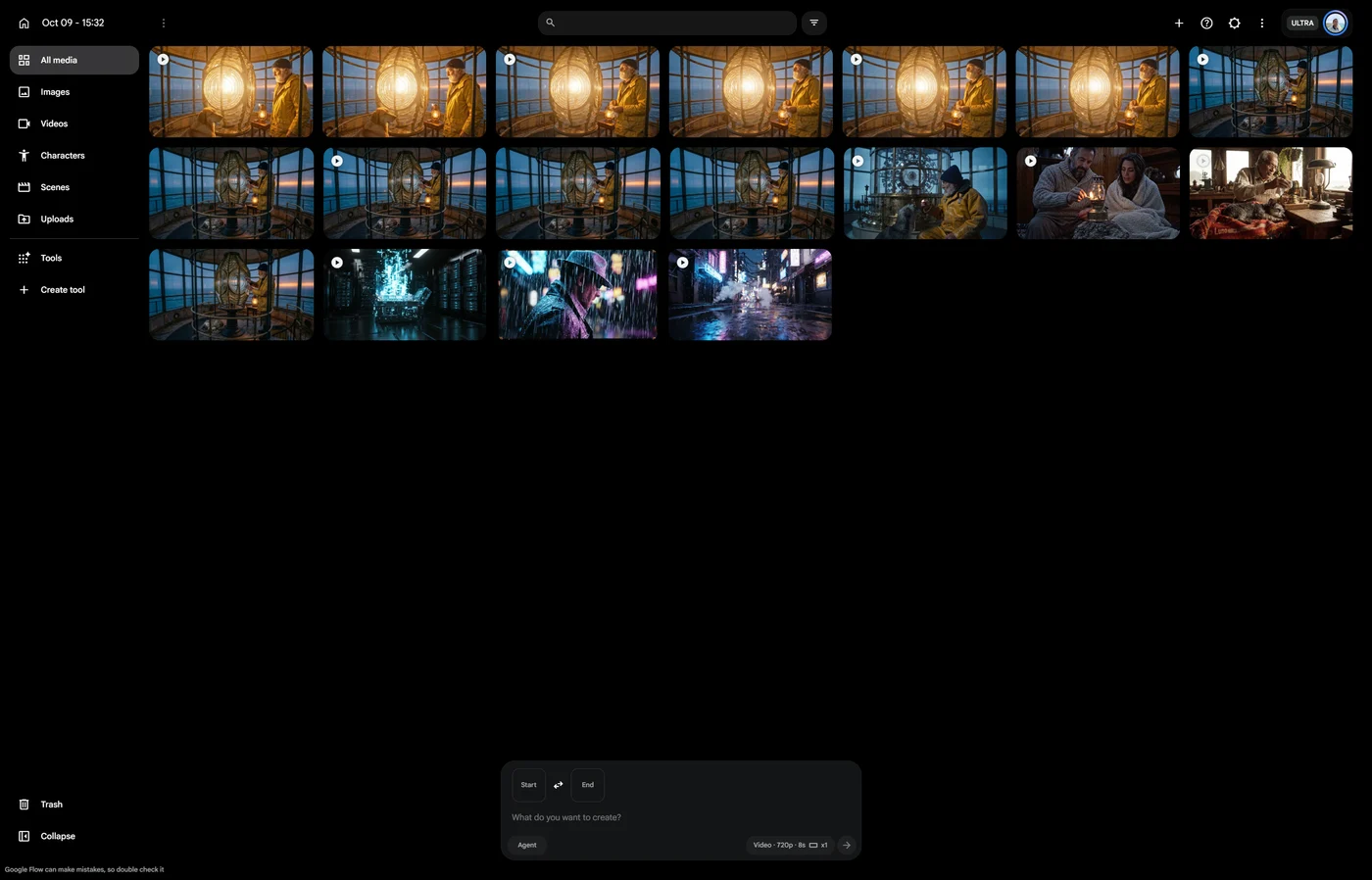 Click to zoomGoogle Labs Flow session driven autonomously by google-flow-mcp during CineZero's Lighthouse production
Evolving from DOM Clicking to a Two-Tier Architecture#
Early prototypes of browser automation against rich creative web apps always hit the same wall: React/Lit virtualized grids recycle DOM nodes on scroll, hidden file inputs report success before an upload finishes processing, and UI redesigns break CSS selectors overnight.
To make google-flow-mcp production-grade, I designed a Two-Tier Execution Engine (src/flow-manager.ts and src/http-client.ts):
Tier 1: Direct HTTP / tRPC & AISandbox API (FlowHttpClient)#
By building an automated network-traffic discovery tool (flow_discover_api and flow_verify_http_tier), I mapped Flow's internal tRPC procedures (https://labs.google/fx/api/trpc/*) and Google's aisandbox-pa.googleapis.com/v1 endpoints.
- Zero UI Flakiness: Listing projects (
flow_list_projects), querying media libraries (flow_list_media), checking credit balances (flow_budget), and polling generation statuses happen over direct authenticated HTTP calls using the browser context's cookies and bearer tokens—executing in milliseconds without touching the DOM.
Tier 2: Persistent Playwright Chromium Fallback (FlowManager)#
For actions that require live browser session state or complex canvas/upload interactions, FlowManager maintains a persistent, logged-in Chromium profile (~/.flow-mcp/chrome-profile) and verifies every state transition before returning:
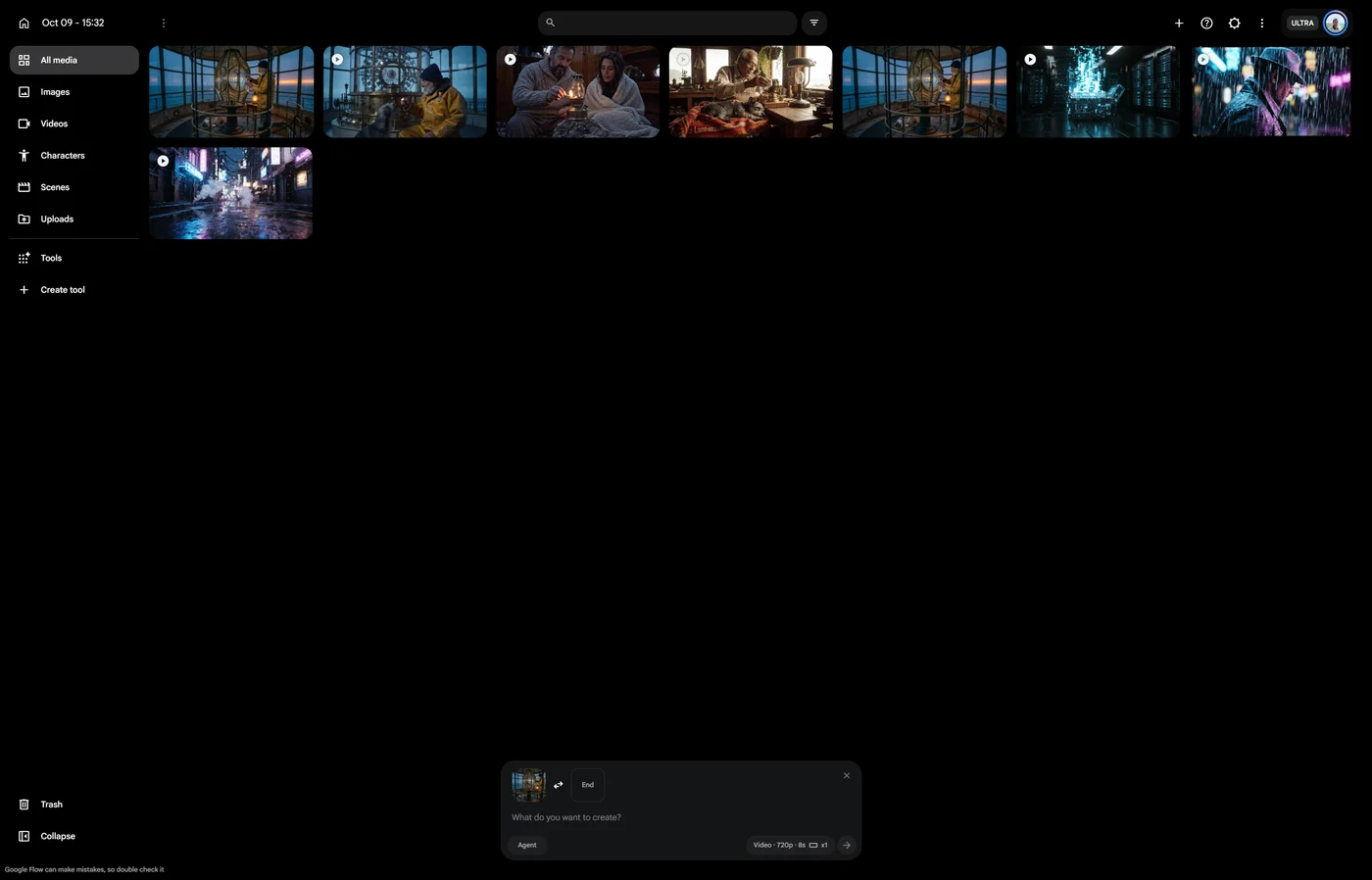 Click to zoomGoogle Flow project workspace managed via google-flow-mcp
Hard-Won Engineering Lessons from Real Productions#
Building an MCP server that survives real multi-shot film productions surfaced several subtle failure modes that google-flow-mcp solves directly:
- Verifying Chip Assignment by Media ID, Not Upload Return:
In Flow's UI, uploading an image via
flow_upload_framecan return HTTP 200 while leaving theStartframe chip empty in the prompt bar—causing Veo to silently generate an unconditioned text-to-video clip and waste credits.google-flow-mcpsplits upload from assignment (flow_assign_frame) and inspects the prompt state to verify the exact media UUID is attached before allowing generation to proceed. - Sharpest-Frame Seam Chaining with FFmpeg:
When chaining two 8-second Veo clips together,
google-flow-mcpuses FFmpeg (src/ffmpeg.ts) to extract candidate frames from the tail of Clip , scores them for sharpness, and feeds the cleanest frame into Clip . - Built-In Credit Budget & Spend Ledger (
src/ledger.ts): Every tool call that consumes Flow credits (flow_generate_video,flow_generate_transition,flow_upscale) logs the pre-call and post-call credit delta to a persistent local ledger (flow_ledgerandflow_budget), ensuring an autonomous agent can never silently drain a user's monthly quota.
Source Code#
The complete 36-tool MCP server, tRPC discovery harness, and Vitest test suite are available on GitHub at daniazar/google-flow-mcp.